

Thanks to a recent winter storm, our family hunkered down each evening after everything on the farm was too frozen to anything else and had a movie marathon. Our 16-year-old volunteered her collection of The Hunger Games movies.

For three consecutive nights, we fired up the DVD player and watched as Katniss Everdeen took on The Capitol and tried to figure out where her loyalties should lie. In her search for happiness, Katniss took turns kissing Peeta and Gale. This infuriated Hubby and our boys. “That wasn’t just a friendly kiss!” was repeated over and over, while Maggie tried to explain that Katniss and Gale were “just friends.”
As all movies based on books do, these films diverged from the plot and our sweet girl took it upon herself each time to say, “In the book…..,” and then proceeded to retell the novel version. This added to the hysteria of comments from my husband and sons.
As the peanut gallery continued with their heckling of Katniss’ escapades in Mockingjay Part 2, my daughter exclaimed, “She was smarter in the books!”
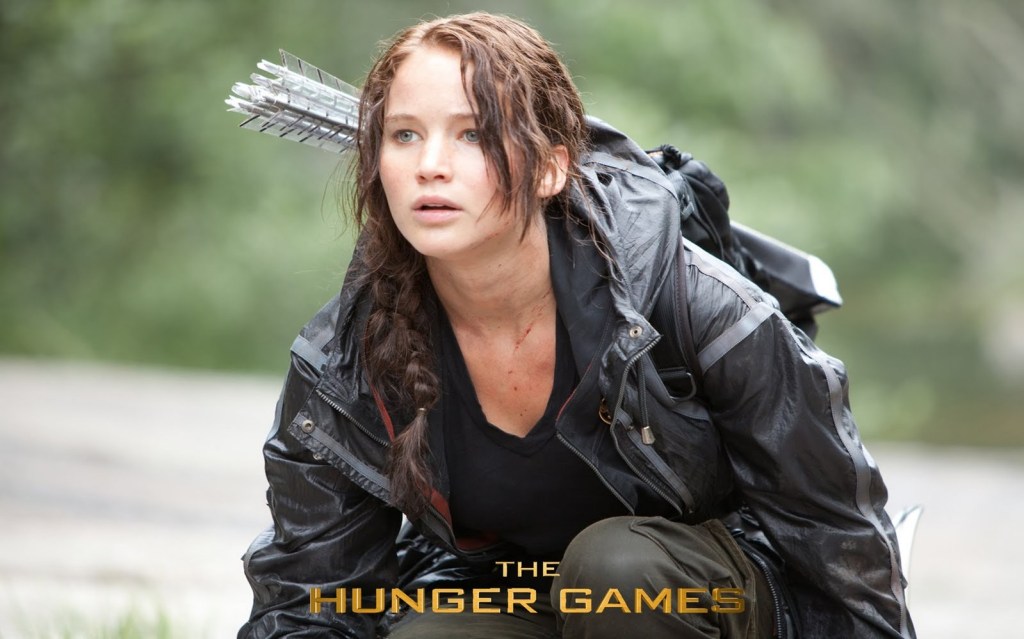
Poor Katniss mourns the loss of her father, struggles to keep her mentally ill mother and helpless younger sister alive, haphazardly falls in love, and potentially saves the entire human race from extinction because of the rule from the greedy Capitol.
Of course, she’s going to be smarter in the book!
No real person could maintain that composure and possess that much knowledge without someone providing the plot.
We would all be smarter if we had an author filling our decisions in with details.
Jennifer Lawrence did a great job of sticking to the character based on Suzanne Collins’ books, but she had to add “real” human emotions and reactions to the situations or the movie would not have been relatable. For some reason, it’s easier for us to accept that characters are omnipotent and without normal emotions when we are conjuring them in our minds from the pages of a book, but not so much witnessing them on screen or in our lives.
We are much more forgiving of people’s mistakes or accepting of their tragic flaws “in the book.” Movies and real life seem to take away our compassion because the person making the decisions is right there in front of us. I think we should apply our “in the book” consideration to real life.
We need to show one another grace when decisions are impacted by emotions or ignorance in “real” life. While God is our creator, we don’t have someone at a keyboard punching in our next move or developing the plan that will fix our current fiasco. We are the writers of our own wrong turns and mishaps along with the good stuff.
The purpose proposed by Intentergy here is to give “in the book” grace to ourselves and others when mistakes are made. Keep in mind that we are the authors of our own journey and we don’t have all the answers at our disposal to employ in every situation. Each choice is a new page we turn. Let’s remember that no one is as smart as “in the book,” but we are all just as real as our problems, solutions, and successes. Turn the page.
By: Melanie A. Peters
P.S. Watching films where children are required to hunt and murder one another while trapped in a confined space, may or may not be the best choice when you have three raging kids stuck at home for an extended period, but that’s my “real” life drama.
P.P.S. Are there any fictional characters you wish you were are smart as in real life?
 Intentergy
Lovely post, Melanie! â¦Quite a shut in snow â Been thinking of the extra difficulties / challenges on a farm. Hope you all dig out soon! Lisa
LikeLiked by 1 person
Thanks, Lisa! This storm has been exceptionally difficult but that’s farming. Thanks for your support and taking time to read.
– Melanie
LikeLike